

What is Carb Cycling and Can It Help Reverse Insulin Resistance?
What is carb cycling and can it improve, or even reverse, insulin resistance? In this blog we are diving into the nutrition strategy of altered carbohydrate consumption and its impact on blood sugar regulation. Let’s get into it!
Understanding Insulin and Insulin Resistance
Role of Insulin
Insulin is a hormone made by your pancreas that moves glucose (sugar) out of your bloodstream and into cells, especially liver and muscle cells, to be used or stored. Our muscle is where the majority of glucose (~70%) is taken up. The more insulin sensitive you are, the more efficiently this glucose hand-off happens, leading to steadier energy and stable blood sugar. When insulin signaling falters, blood sugar swings, fatigue, and longer-term metabolic issues creep in.
Optimal fasting insulin is between 3 and 6 µIU/mL, although most lab reference ranges are much wider. As insulin sensitivity declines, the pancreas produces more insulin to keep up with glucose transportation, leading to a steady incline in insulin levels, which reflects insulin resistance.
The Development of Insulin Resistance
Once again, insulin resistance develops as cell receptors decrease their sensitivity to insulin, resulting in glucose sticking around in the blood as opposed to being transported into cells. The pancreas therefore produces more insulin in response to more glucose being in the blood.
The development of insulin resistance occurs in stages, however. First, we see insulin increase while glucose remains normal, because your pancreas is working in overdrive to keep glucose levels stable. Eventually, as insulin sensitivity continues to decline, glucose levels start to creep up while insulin remains elevated.
Chronically elevated insulin levels over time can set the stage for inflammation, gestational and type 2 diabetes, non-alcoholic fatty liver disease, Alzheimer’s, fertility challenges, and other hormone issues including PCOS. In fact, it’s estimated about 70% of individuals with PCOS have some level of insulin resistance. In excess, insulin can also promote fat storage and the growth of fat cells, contributing to weight gain or weight loss resistance.
Once you get to the more advanced stage of insulin resistance, your pancreas starts to burnout, and pancreatic beta-cells start shutting down insulin production, leading to a drop in insulin levels. This process is many years in the making, in fact research suggests insulin resistance often precedes type 2 diabetes by 10-15 years. The graph below outlines how insulin resistance advances over time, ultimately developing into type 2 diabetes if not addressed.
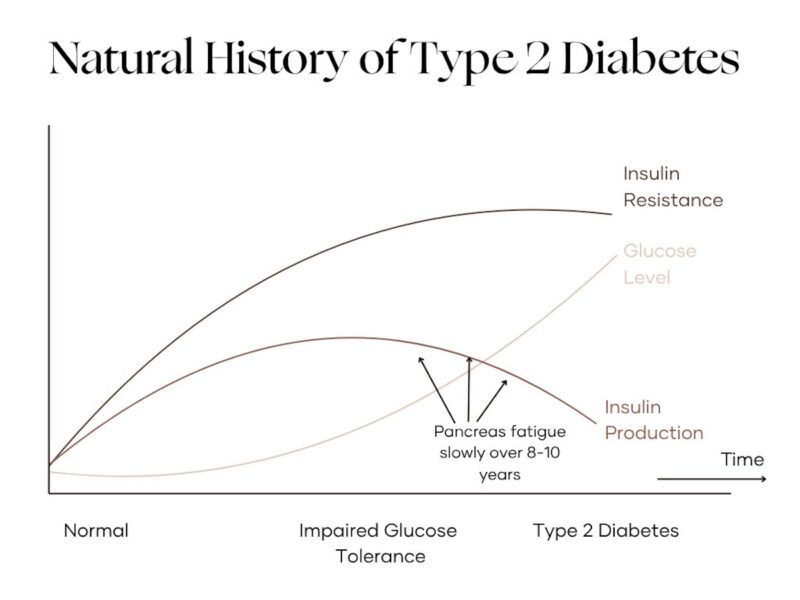
Adapted from Henry, Am J Med. 1998; 105(1A):20S-26S.
Where Carb Cycling Fits In
Carbohydrate cycling is the practice of shifting carb intake from day to day or within a day. For example, this could look like having “low-carb days” a few days each week, or varying your carbohydrate content from meal to meal.
In order to carb cycle strategically, it’s important to consider two key factors that influence insulin sensitivity: exercise and the time of day.
Muscles are our most important site of glucose utilization. After resistance training especially, muscles act like a glucose sponge, making us more insulin sensitive. Planning higher-carb meals post-workout, or increasing total carbohydrate intake on tougher training days can support performance, recovery, and optimal hormone levels through regulating leptin and ghrelin hunger hormones. On rest days or light activity days, lower-carb meals can reduce insulin demand.
In relation to the time of day, insulin sensitivity naturally is at its highest earlier in the day and declines in the evening. Front-loading your carbohydrates earlier in the day and avoiding a high-carb dinner can help support glucose metabolism according to this rhythm. That being said, this doesn’t mean you should completely avoid carbs at dinnertime, as that can lead to low blood sugar events (hypoglycemia) overnight, which can cause sleep disturbances. However, really prioritize fiber-rich carb sources such as lentils, beans, and root vegetables.
Modulating carbs through carb cycling can improve insulin sensitivity, but it’s not a standalone fix. It’s important to balance carb intake within the context of overall energy (calorie) needs and your activity level. It is also critical to build lean muscle for better blood sugar control and enhanced glucose metabolism. And at the end of the day, it’s essential to address the root of insulin resistance, which is mitochondrial dysfunction.
Supporting Mitochondrial Function to Reverse Insulin Resistance
Mitochondria are your cellular powerhouses, responsible for converting food energy into chemical energy (ATP) that each of our cells rely on. When mitochondrial function lags, glucose metabolism does too, along with nearly every other cellular process. Mitochondrial dysfunction is always at play with chronic conditions, including insulin resistance.
Interestingly, mothers pass mitochondria down onto their offspring, so mitochondrial health really matters for reproductive outcomes and hormone health. So many factors influence mitochondrial health, both negatively and positively. Environmental toxins, mold mycotoxins, and heavy metals can all impair mitochondrial function. While alternative therapies such as sauna, cold exposure, and red light therapy can all support mitochondrial function, nutrition is an incredibly powerful tool to support mitochondrial health.
Minerals, antioxidants, anti-inflammatory omega-3 fatty acids, B vitamins, and amino acids, all play critical roles for optimally functioning mitochondria. These nutrients serve as mitochondrial cofactors, which are like batteries that help fuel the trillions of reactions that are occurring within your mitochondria all the time.
Carb Cycling, Mitochondrial Support, Where Do You Start?!
Carb cycling can be a useful tool for blood sugar management and insulin sensitivity, but reversing insulin resistance requires a multi-pronged approach involving mitochondrial support, balanced nutrition, resistance training, and personalized supplementation.
There are a variety of ways to assess your mitochondrial function through advanced functional testing. Of course, getting a comprehensive look into your insulin sensitivity and glucose metabolism is a great foundational step!
After exploring how insulin resistance develops, we know that we can’t stop at only testing fasting glucose levels. Even Hemoglobin A1c may not be the most accurate assessment in many individuals, so while it’s a good value to test, we really need the full understanding by testing fasting insulin.
Together these markers tell a story and give us valuable insight into your insulin sensitivity as a whole. That’s why we created our Blood Sugar & Insulin Hormone Testing Package – test, don’t guess, and book your package today.
Written by Romana Brennan, MS, RDN


Comments +